

How To Write Authentic
Latin Rhythm Section Parts
I think it is pretty safe to say that approaching Latin music when you haven’t grown up in that culture can be quite challenging. From a writing standpoint, it is hard to feel confident about what you compose at the best of times, and even more so when you are trying to replicate a style you don’t feel comfortable with. When looking at Latin music, one area seems to draw the most confusion: what to do with the rhythm section. Coming from a jazz arranging perspective, many of the roles in Latin music are slightly different, with unique rhythms and textures being used that aren’t typically found elsewhere. Not to mention we have to be mindful of clave orientation and how it impacts each instrument. Learning what to use, or perhaps more importantly, what not to use, takes time, but is definitely obtainable regardless of your background. For me, everything started to slot in place once I understood the lineage of the Cuban style son, one of the first, and definitely the most popular styles to integrate Western rhythm section instruments alongside Latin percussion. However, it took me a bit of time to make that discovery.
As a young white Australian, the last thing on my radar was Latin American music, with the closest I got being Smooth by Santana thanks to my mum’s obsession with the song. I found it quite difficult to understand the Latin music I heard, trying to make sense of it all without any foundational knowledge. I remember back in grade 9, I was tasked with learning how to play both a mambo and samba bass line for an upcoming audition. Being so young and having never been exposed to either, I scoured the internet only to find examples that sounded identical to one another. I went into the audition and tried my best, somehow doing well enough to be admitted into the ensemble, but still never knowing what either styles were or what the appropriate bass line was. To me at that time, both of those styles may as well have been the same thing even though I now know they are worlds apart from one another. To make matters worse, I was surrounded by peers and teachers who didn’t have that much more knowledge either, creating somewhat of an echo chamber of interpretations where no one really could explain the music in any great detail.
A few years later I was introduced to more Cuban rhythms when I was recommended a Latin bass book. While the notes and rhythms made sense, each one was paired with style names I simply had no idea about. I saw words like guaracha, which looked quite different from others I had come across before like son or mambo, but for some reason had the exact same type of bass lines. Slowly I was finding more and more terms but still nothing made sense.
Around the same time I signed up for a beginner Afro-Cuban music class where the professor walked me through some of the basic rhythms and percussion parts found in the culture. It was absolutely fascinating and for the first time ever I came away from many classes feeling like I had slightly more of an idea about what was going on. Unfortunately, on the flip side, I was also being introduced to considerably more music that I had never come across before and was often overwhelmed. Even though I had progressed as a musician and tried to engross myself with the music, I still felt far closer to that grade 9 audition. Not to mention every time I tried to play a Latin gig I fell on my face, leading to one too many embarrassing moments. This carried on for a number of years, and while I was still trying to work it all out my interest in jazz arranging developed. I started incorporating what little I knew into my own big band charts, trying to capture the exciting textures I had learnt in class. Unfortunately, I lulled myself into a false sense of confidence after receiving a considerable amount of help from the Latin Jazz professor, ultimately leading me to quite the realization after I got called out by someone who actually knew what they were doing.
Eventually I said enough is enough and sat down to try and work it all out. The process took months but after listening to countless tracks alongside reading dozens of books and articles, it all started to come together. What I found was that many of the styles that are played today were impacted by a style called son montuno. Thanks to a composer named Arsenio Rodríguez, in the 1940s many elements of Cuban music started to be incorporated into a singular sound which created the framework for Latin music all over the world. As a result, all of the styles that were touched by son montuno shared a similar pool of rhythm section parts even though the style names were different. With this discovery, for the first time I felt less overwhelmed and the music started to make a little more sense.
Now being on the other side of that multi-year journey, what I’ve come to realize is that my story is not unique and many other people also find themselves in a similar situation. Not only that, but if I couldn’t understand Latin bass parts as a professional bassist, then I can’t imagine what it would be like to come from a non-rhythm section background. That’s why I decided to put together this particular resource. While I am definitely no master, I want to help others who find themselves in a similar situation to where I was a few years ago and hopefully help them to avoid any potential embarrassing moments.
Instead of simply listing the various rhythms and the associated instruments that play them, what I’ve chosen to do is unpack them all by looking more closely at the creation of son montuno. Personally, I found that once I knew a bit more about the context and how these rhythm parts came about, it helped me better comprehend which settings I could apply them to and which to avoid. However, this resource doesn’t stand alone and operates as a part 2 to the previous article where I unpack the development of son and how to write a montuno. In addition, many of the rhythms discussed are used within the two bar clave system which needs to be understood in order to use them effectively. If you aren’t comfortable with clave or don’t know what it is, I would highly recommend checking out my other resource on the topic before continuing. Lastly, this resource is by no means an exhaustive list which covers every single option available when writing Latin rhythm parts. There would simply be too many to cover and at a certain point it wouldn’t be necessary any more. My aim is to provide you with a solid understanding that you can go away and build from as well as hopefully help you feel more confident with the topics at hand. With that said, let's get stuck in!
Son Cubano
For those who may not have read the previous resource on son, what you need to be aware of is that at the start of the 20th century a number of rural styles from eastern Cuba blended together to form an early variant of son. What made this group of Afro-Cuban styles different from others like those belonging to the rumba family was that son featured some form of harmony being implied by accompanying instruments, specifically the Cuban guitar known as the tres and some form of bass instrument (depending on the exact date it differed). After developing in the isolated mountainous region of the country for decades, thanks to the Cuban War of Independence the style found its way to the western cities of Cuba. At this point the first widespread variation of son was established, often referred to as son cubano or son habanero, the former being what I will be using in this particular resource when discussing the style.
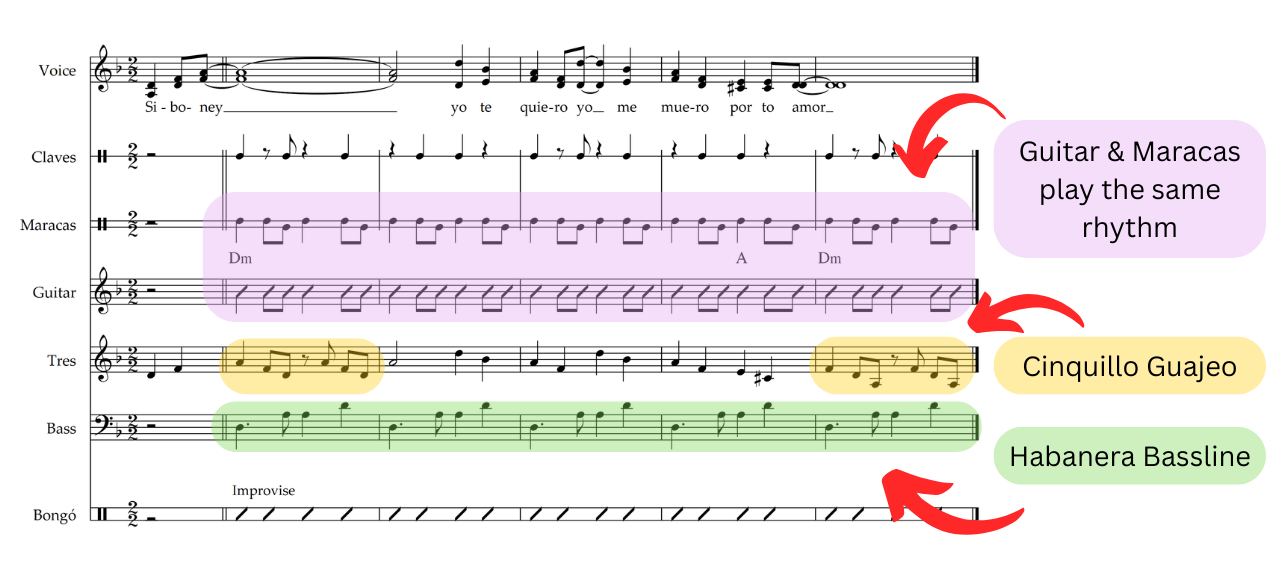
Once son cubano had become a staple across Cuba in the first decades of the 1900s, the prominent instrumentation associated with the style was the son sextet which featured two vocalists, a tres, guitar, upright bass, and bongó, with the two singers playing either the claves, maracas, or guayo. Thanks to the development of precursor styles such as changüí, there was an established norm for each of these instruments. Most notably was the tres, which played a repetitive pattern known as a guajeo but you most likely know it by another name today, montuno. There were many options available for a tresero to choose from but most commonly the guajeo would double the vocal refrain and feature some level of syncopated chord tones/arpeggiations that were either clave neutral or clave orientated. As the previous resource went into more depth covering the development of guajeos, I won't delve into the topic further here. But don’t worry, as we look further at the transition of son cubano into son montuno in this resource, we’ll definitely look at guajeos/montunos more.
Moving to the bass part, in the early years of the 20th century there was no fixed choice of instrument to fill the role. Initially, the favored choice was the tingo talango, an earth bow that was fixed to the ground and couldn’t be transported. Somewhere down the line though, most likely when ensembles wanted to be more flexible with the location they played, the need for a new instrument arose and answering the call were two options. Due to there being no recordings from this period, we don’t know for sure when the instruments changed or in what capacity, but we do know that sometime between the creation of the earlier pre-son styles in the later decades of the 19th century and the first recordings in the 1910s, the instrument changed from the tingo talango to the marimbula (a large bass thumb piano the size of a small cabinet). However, we do know that during that period another bass instrument was also commonly used, the botija (a large jug played by blowing air through a hole), which was likely the interim choice until the marimbula became the norm. However, by 1923, one of the more prominent ensembles, Sexteto Habanero, made the change to the upright bass, which eventually led to son cubano being firmly associated with the instrument rather than any of the previous options. But why do we need to know which bass instrument was being used? Well, each instrument had a different way of being played and thus the patterns used for the bass part changed.
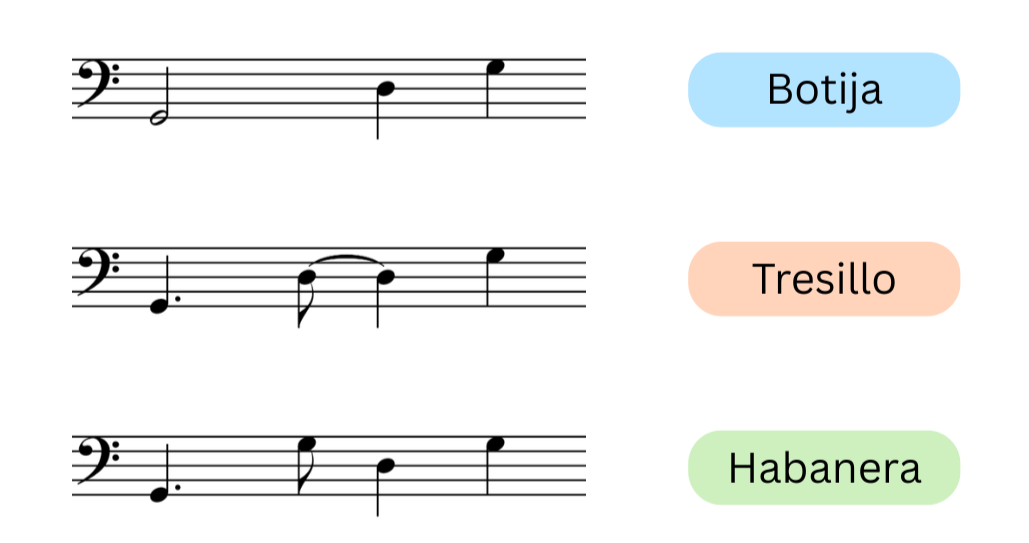
By the time the upright bass had become the mainstream option, there were a number of rhythms available to bassists, each of which derived from the various bass instruments which had come before. Early iterations of the style pre-upright bass used far less notes and often were more downbeat orientated due to the absence of a guiding bell pattern. As a result, one of the common rhythms was a half-note/minim followed by two quarter notes/crotchets which was commonly associated with the botija. Most often the bassline would hover around the root and fifth of a given chord. Alongside this rhythm were two other options which became more popular with the marimbula and upright bass. Likely inspired by the bass lines found in danzón, the most popular was the tresillo, with the other option being the habanera. Collectively, these three rhythms made up the foundation of all son basslines in son cubano and could be used interchangeably. All three are considered clave neutral so could land on either side of clave without causing any issues and in a number of recordings from the time you’ll hear bassists move between them throughout a given piece. However, if only one rhythm was to be used the most common was the tresillo, which dominated the majority of son recordings in the 1920s and 30s.
Quiereme Camagüeyana
Sexteto Boloña
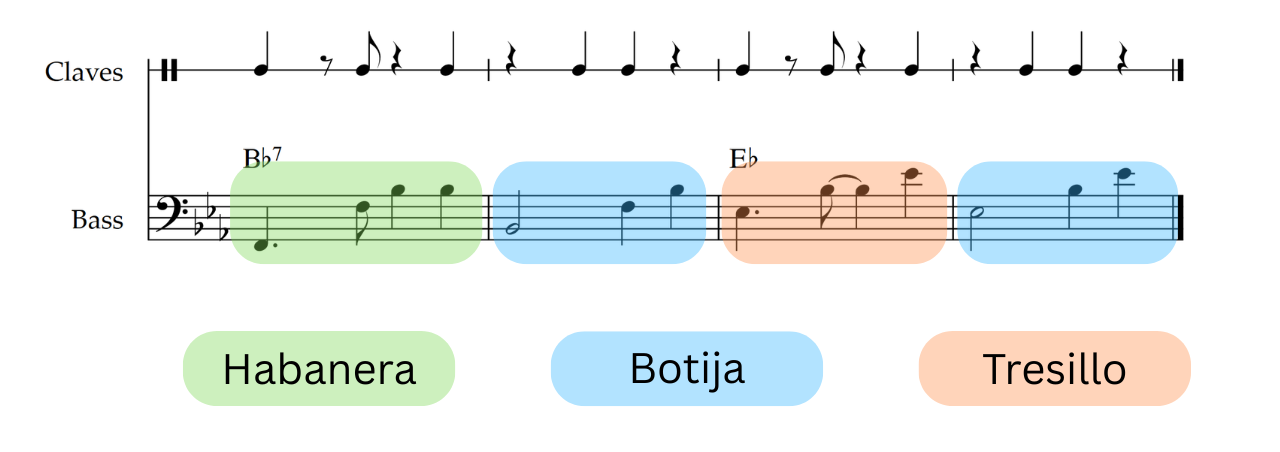
Alongside the tres and bass were the various percussion instruments. For the most part, the bongó would improvise in a similar capacity to the quinto in rumba and only occasionally play a consistent supporting pattern. The guayo and maracas would double the same rhythm of a quarter note/crotchet followed by two eighths/quavers repeated consistently throughout a piece, and the claves would be assigned the son clave bell pattern. Interestingly, the guitar would often strum chords with the same rhythm as the guayo/maracas or alternatively strum every eighth note/quaver in a given bar.
Siboney
Sexteto Nacional
In the second half of the 1920s, the trumpet joined the mix and was generally free to improvise throughout a given piece. Contrasting to jazz improvisation at the time, the trumpet would often play arpeggiated lines more in line with other Cuban instruments like the tres. It was also common for the trumpet to establish some sort of melodic line in interludes and introductions, sometimes being the only voice playing the line and other times doubling the tres.
This model for son stayed almost identical for years, with much of the recordings from the late 1910s through to the 1930s being represented by the characteristics we’ve just discussed. But son eventually evolved into a new form, one which had new rhythm section roles that can be helpful for us to be aware of. However, in order to understand how the style transformed into son montuno, one central piece of social history needs to be explored.
Thanks to the involvement of the United States in the Cuban War of Independence, from 1898 to 1933, Cuba’s ruling party was dictated by the United States government. Over the span of decades, the country was plagued with corrupt leaders who placed prohibitive laws against Afro-Cuban culture and ultimately forced much of Afro-Cuban music to remain hidden even though they were considered free people. That all changed in 1933 when a successful military coup ousted the government officials and put in place the first Cuban political party not controlled by the Unites States. With the new government came major reforms such as the establishment of an 8-hour workday, a minimum wage law, women’s voting rights, regulated loans, and many other significant changes. While the leadership changed significantly over a small number of years, by 1937 a long-term leader was instated and stability was achieved across the island. As a result, Cuba experienced a major creative boom, one which changed Cuban music forever.
Potentially the most relevant point for this resource was that the new government changed the legislation which prohibited Afro-Cuban culture. For the first time since the colonization of Cuba, Afro-Cuban culture was able to exist freely in public, resulting in aspects of Afro-Cuban music integrating with popular Cuban styles. Perhaps most importantly to the story of son was that the drums associated with Afro-Cuban music were now allowed to be played in public, opening up a world of possibilities and unlocking a critical new factor to the development of Cuban music. The conga could now be played alongside any ensemble, and as it was slowly incorporated, the drum redefined the roles of each percussion instrument while also reinforcing the lineage of Afro-Cuban culture from the early folkloric styles all the way to rumba. Many figures helped define this transition in Cuban music but none more than a blind tres player named Arsenio Rodríguez.
Arsenio Rodríguez
When looking at the musicians and composers associated with Cuban music there is a standout figure who singlehandedly shifted the trajectory of son in the 20th century. Of course, Arsenio Rodríguez was not the only person to integrate changes to the style but the additions he made have been used consistently in a wide range of Latin music over the second half of the 20th century. Due to the significance of his contributions, much of the remainder of the resource will be based around his work, specifically looking at the styles he helped create as well as the various ways he adapted what each instrument played. Although it may be easy to come away from this resource thinking that Rodríguez is a household name in Cuba, unfortunately he has largely been forgotten due to the popularity of later styles and the mambo boom in the 1950s. As it is quite likely many readers may have never come across him before, to get us started here’s a brief biography about his early life.
Rodríguez was born in 1911 in the province of Matanzas but four years later his family relocated to Güines where he spent most of his early life. Sometime between the age of 7 and 12, he was involved in a tragic accident where a mule kicked him in the face, leaving him permanently blind as well as forcing doctors to remove one of his eyes. As a result, Rodríguez grew closer with his older brother Kiki who aided him with everyday tasks. It was also during this time when he turned to music to escape the harsh reality of his new life. Being an Afro-Cuban, he was surrounded by a variety of cultures such as the Palo religion with its plethora of ceremonies and associated music thanks to his Congolese grandmother. His father would also take him and Kiki to participate in rumbas as well as learn instruments from the local masters, further reinforcing a strong Afro-Cuban folkloric base to his musical understanding. Other influences were present such as Santeria from a neighbor as well as the popular son cubano style which led a young Rodríguez to pick up the marimbula, botija, and the tres. In 1926, a major hurricane hit Cuba, destroying much of Güines and Rodríguez’s family once again relocated this time to Marianao, a borough of Havana. Although tragic, the hurricane repositioned Rodríguez to learn from multiple professional musicians such as Felipe Neri Cabrera who was the vocalist for Sexteto Habanero at the time and who allowed Rodríguez and Kiki to attend rehearsals, evening allowing them to participate from time-to-time. Over the coming years, Rodríguez worked on his tres playing and eventually met vocalist Miguelito Valdés, an event which led to Rodríguez’s first major hit as a composer with Orquesta Casino de la Playa.
Before continuing with Rodríguez and Orquesta Casino de la Playa, it should be noted that the son sextet was not the only popular instrumentation in Cuba at the time. Alongside the son boom, Cuba experienced a major surge in tourism from the United States due to the Volstead Act of 1919, more commonly known as prohibition. Casinos began being built in Havana, offering performance opportunities for local musicians as well as an avenue for Americans to drink, gamble, and fornicate. With the Americans came their music and slowly jazz began seeping into Cuban culture. This wasn’t the music of Duke Ellington or Fletcher Henderson though, instead Cuba was mainly influenced by the popular white acts of the day such as Paul Whiteman. Due to jazz being played primarily in the new casinos and hotels, the bands were made up of white musicians, often led by a violinist. However, elements of the style seeped into the culture of Havana and a new ensemble format was created called the Cuban jazzband. The ensemble featured a combination of horns including trumpet or cornet, trombone, and saxophone or clarinet, alongside a violin, piano, timbales, bass, drum kit, and possibly a banjo, with the main difference to the son sextet/septet or danzón’s orquesta típica being the omission of hand percussion. These 7 to 10-piece bands played in a variety of locations including hotels, cabarets, and clubs and featured an extensive repertoire of danzónes, tangos, charlestons and more. Before long, these ensembles transitioned into the typical big band format found in the United States as well as played a crucial role in influencing the instrumentation of other ensembles in the 1940s. Orquesta Casino de la Playa was actually formed from one such band after nine members from the Los Hermanos Castro Jazzband left to begin their own group with Miguelito Valdés.
After a large hiatus due to the Great Depression and the violence associated with the 1933 military coup, the major United States recording label, RCA Victor, returned to Cuba in 1937 to record several local acts. Over a period of three days, the label recorded 141 tracks from 24 different groups and it just so happened that on the last day the second last group to record was Orquesta Casino de la Playa. The ensemble recorded 6 different tunes, including Rodríguez’s composition Bruca Maniguá which was informed by the Afrocubanismo movement of artists, poets, and composers that pushed modern interpretations of Afro-Cuban culture in order to redefine Cuban society. The result was a new style of music which took inspiration from zarzuela, bufo, son, and Afro-Cuban traditions that Rodríguez called afrocubanos, or afro for short.
For the most part, Bruca Maniguá was built off of common characteristics found in multiple styles of Cuban music, such as the form which is a combination of the tango-congo genre of zarzuela and the montuno section from son cubano. The piece was divided into four sections: the introduction, verse, bridge, and montuno, with the first three featuring the defining rhythm of the two-bar habanera rhythm. While the rhythm had existed in Cuban pop culture for at least a hundred years at this point, Rodríguez used it in a slightly different format. Instead of one bar being associated with a side of clave, he treated the two-bar rhythm in double time, thus allowing it to be repeated twice over a single clave cycle. The rhythm itself is not as prominent in the original 1937 recording, however in later versions Rodríguez made it is clearly outlined on the conga. Years later, it became a common rhythm used by Dizzy Gillespie and Chano Pozo in tunes like Cubano Be-Cubano Bop and Tin Tin Deo.
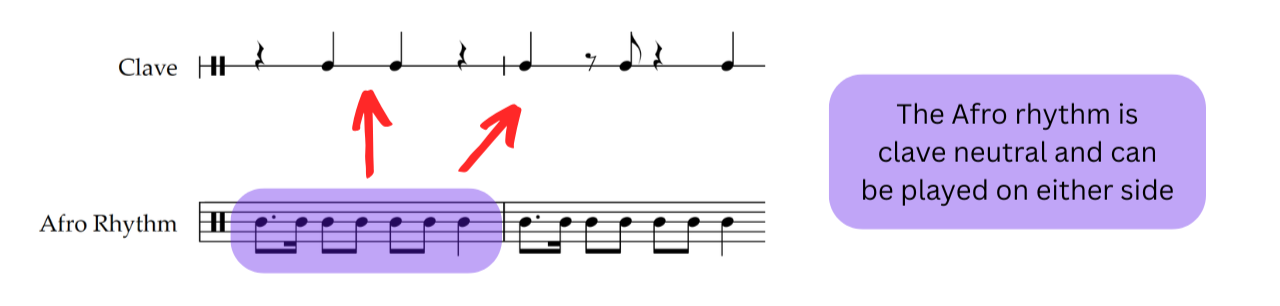
The other defining feature of afro was the lyrics which featured bozal, a creolized African/Spanish dialect, and commentated on Afro-Cuban life. Rodríguez craftily used common characters from bufo theatre, the racist blackfaced satirical form of entertainment associated with guaracha, to make it seem as if the lyrics followed in that tradition. However, by using bozal, he was really offering a parody of the topics found in bufo and instead highlighted strong themes of Afro-Cuban culture. The end result was a smash hit for Orquesta Casino de la Playa which received international recognition and was played to many white audiences who never knew the true meaning behind Rodríguez’s lyrics. Ironically, white audiences thoroughly enjoyed the song even though it spoke about condemning slavery and featured many words straight from Congolese and Yoruban culture. While Bruca Maniguá was Rodríguez’s first major composition, it actually ended up as his most popular even though it only featured a small number of innovations compared to his later works.
Other than introducing the new Afro style into Cuban music, Orquesta Casino de la Playa also brought a rather new development in son to the public’s attention in their track Dolor Cobarde. With the popularity of the Cuban jazzband came the integration of the piano into Cuban popular music, and although they weren’t the first Cuban band to include a piano solo, Dolor Cobarde featured a piano solo which established a distinct Cuban way to play the instrument. The instrument mimicked the tres and played guajeos in octaves, ushering in the start of the piano montuno which has since become a staple in Latin American music.
After years of playing in a variety of son ensembles, in 1940 Rodríguez created his own group by the name of Arsenio Rodríguez y Su Conjunto. At the time the word conjunto simply meant ensemble but with the recordings he made with RCA Victor that same year, the new format he had established quickly became associated with the word. Rodríguez’s conjunto was a hybrid of the Cuban jazzband and the son septet, being made up of two vocalists, one of which played the maracas and the other the claves, two trumpets (which would eventually become three) piano, tres, guitar (who also doubled on voice), bongó, conga, and upright bass. Although this may not seem revolutionary today, the new format placed the bongó and conga alongside one another as well as tres and piano, two combinations that were uncommon at the time. As there were now more trumpets, arrangements were also required, making the conjunto exist in a space between the highly notated orquesta típica (later the charanga) and the non-notated son sextet/septet format. Between these three additions, son cubano started to undergo some major changes that helped establish some of the norms with Latin rhythm section parts still used today.
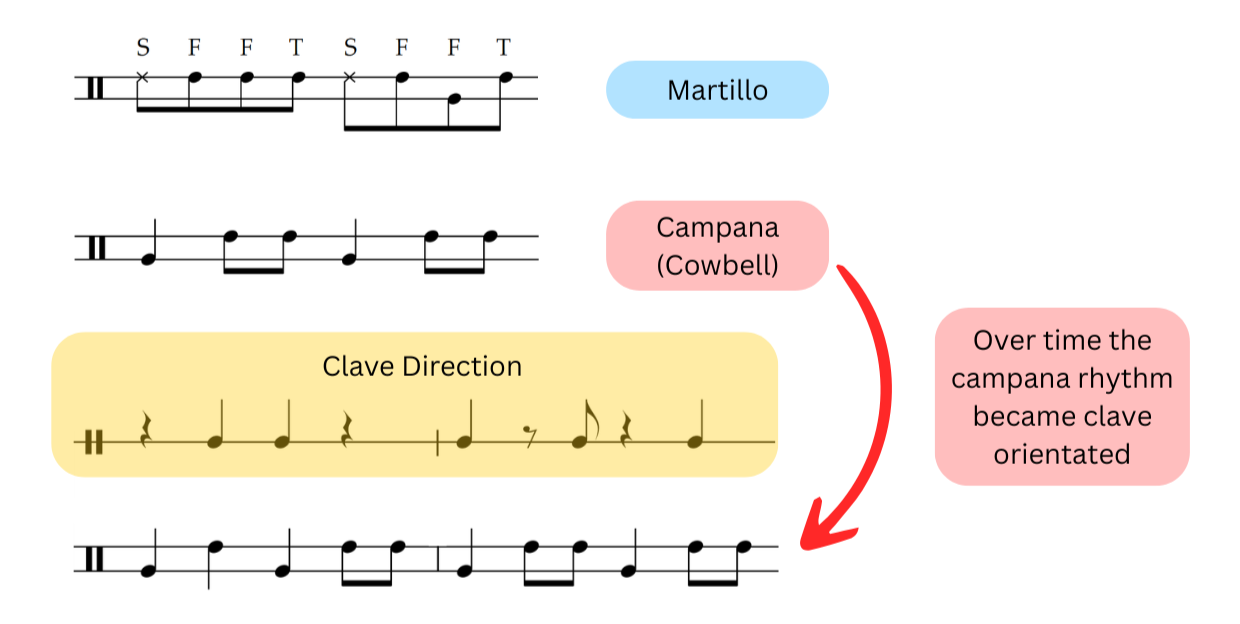
Firstly, in the son septet the bongó traditionally played a similar role to the quinto (high pitch conga) in rumba, improvising consistently throughout a given piece, but with the integration of the conga alongside the bongó, one of the instruments had to change their role to allow for both to be played together. Rodríguez achieved this in two ways. In the verse section, he had the bongó maintain its usual role while the conga played a supporting role similar to the middle and low drums found in rumba. This gave the bongósero freedom while also providing additional harmonic and rhythmic support from the lower pitched drum. However, in the montuno section, Rodríguez had the bongósero switch to a large cowbell called a campana which predominantly played on the downbeats but at times mimicked the same rhythm found in the maracas. This achieved two results, one being more freedom for the conguero to play additional slaps and open tones, as well as a link to the metallic bells of the various Afro-Cuban traditions. Now, Rodríguez wasn’t the first to add a cowbell to son but earlier groups used a much smaller bell which didn’t have the same impact as the campana. It should also be noted that sometime in the 1940s-50s, the bongó started to play a consistent groove known as the martillo. I haven’t come across an example of Rodríguez’s conjunto using a martillo during this period (the bongósero primarily improvised) but it was a popular option for La Sonora Matancera. It is hard to tell exactly when the rhythm began being integrated as the instrument can be hard to hear in the recordings from that period, but by the late 40s it started to be captured.
Moving onto the piano, Rodríguez used it in a similar way to Orquesta Casino de la Playa, so much so that some historians have proposed that Rodríguez was the person who suggested the concept to the ensemble in the first place. In his own conjunto, he doubled the tres part on the piano and allowed it to solo in the middle of compositions. Eventually, the piano would replace the tres entirely but at the beginning of his conjunto both instruments were played together. By having two instruments fulfilling the same function, Rodríguez began assigning a different guajeo to the piano and tres, creating an interlocking effect reminiscent of the overlapping drum patterns in Afro-Cuban music.
Quien Será Mi Amor
Arsenio Rodríguez
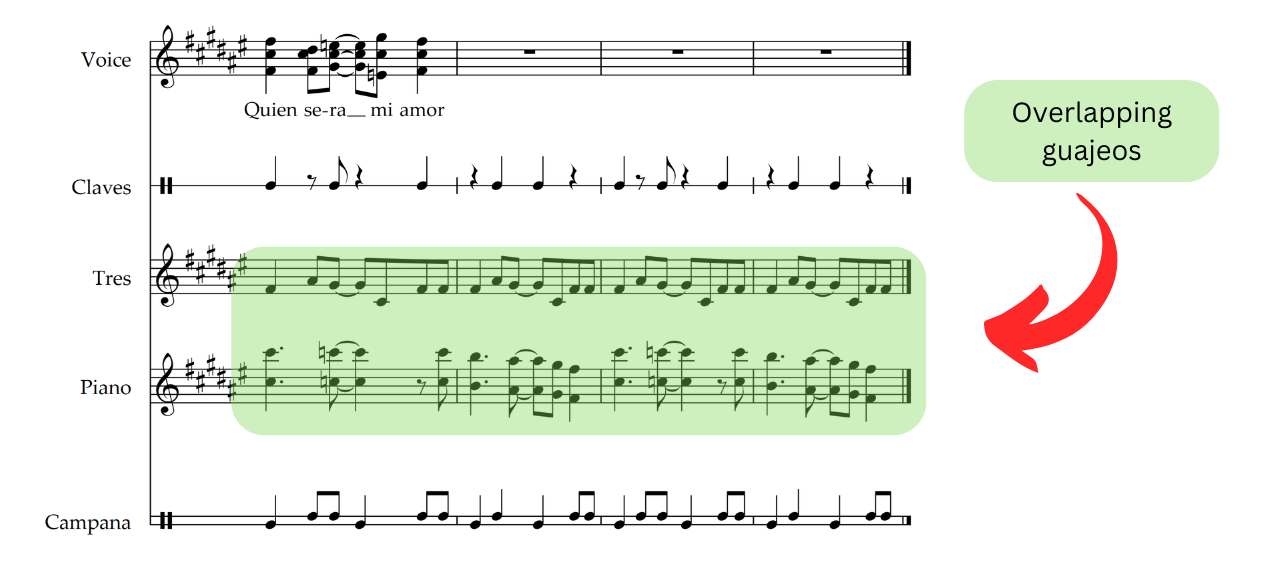
Looking a little more closely at the guajeos being played by Rodríguez’s conjunto in the early 1940s, we see many of the rhythms falling in line with the conventions established by the son sextets/septets of the 1920s. For the most part, the guajeos double the melody lines and feature a significant amount of arpeggiation. With the addition of the piano, it was common to hear some level of chordal playing be incorporated into the accompaniment, but in terms of the montuno patterns themselves, they mainly fell into the two categories we established in the previous resource. Either the guajeo would lean more heavily on offbeat eighths/quavers with a downbeat often signalling the 2-side of clave, or they would play clave neutral rhythms based around arpeggiating the cinquillo rhythm.
Finally, the extra trumpet reinforced the presence of a horn section which could be used in multiple ways. Rodríguez was a genius with the trumpets and made use of monophony, homophony, and polyphony in their parts. The lead player still had the ability to improvise like how they did so with the son septet, but the extra member gave the conjunto more flexibility and power in the higher register.
Son Montuno
Following on from Bruca Maniguá and the formation of his conjunto, Rodríguez helped take son further by creating a new variation of the style in the 1940s. It had been over thirty years since son had arrived in Havana and during that time the style had lost some of its syncopation and drive. Being a knowledgeable musician in multiple Afro-Cuban styles, Rodríguez looked to take aspects of early son, specifically elements of changüí and other precursor styles from the mountainous region of Cuba, and apply it to his conjunto. He named the new style son montuno, meaning son of the mountains, a name which had been used prior to describe the early variations of son but with changüí’s new adaptations, took on a whole new meaning.
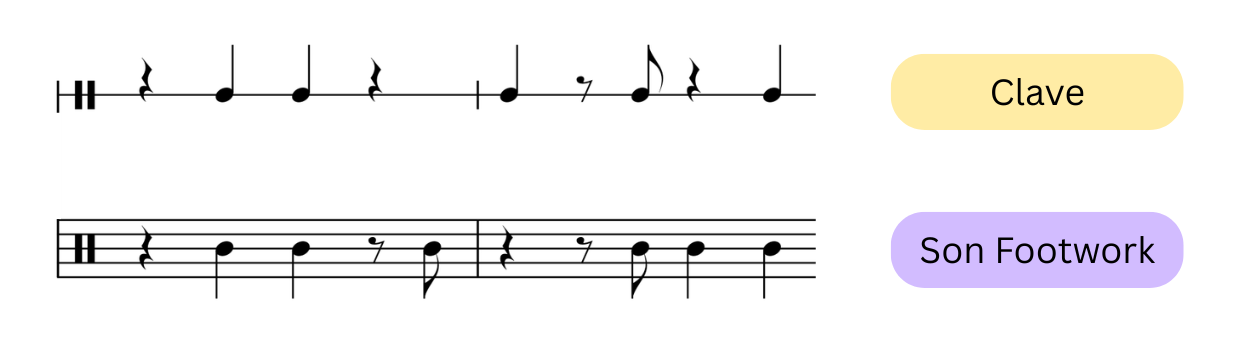
To begin with, Rodríguez put emphasis on contratiempo (the feeling of consistent offbeats) in the melodic and harmonic parts as well as framed songs to build toward a climax. Although these were small changes at first, they were developed into defining features of son montuno. From there, he focused on three key factors: the rhythm of the accompanying son dance, interweaving parts, and creating melodic bass lines. As is the case with much of Cuban culture, dancing played a pivotal role in son and followed a unique rhythm alongside the music. Being aware of said rhythm, Rodríguez started to incorporate prominent accents from the footwork into his guajeos, melodies, and accompaniments. Specifically, he featured the and-of-4 on the 2-side and the and-of-2 on the 3-side.
No Toque El Guao
Arsenio Rodríguez
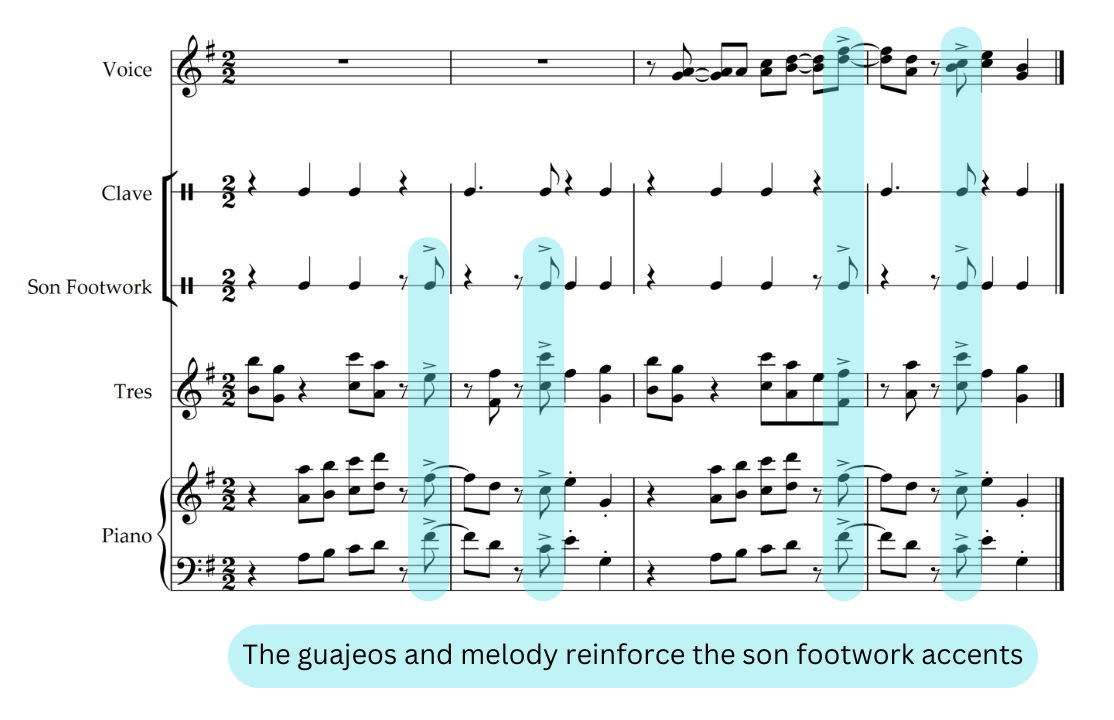
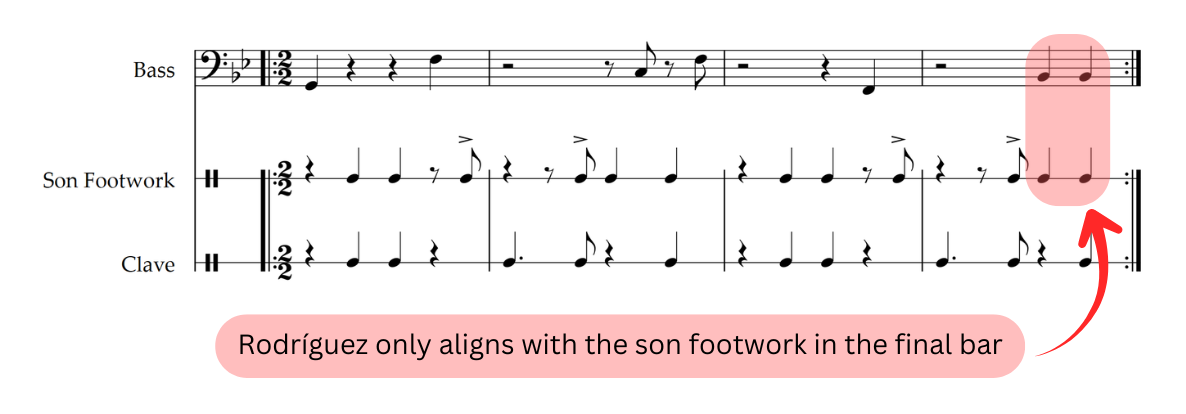
Rodríguez was a master of using rhythms derived from dancing in his compositions, sometimes avoiding the accents purely to challenge the dancers. In his composition Soy el Terror he deliberately placed the bass line in the rests of the son footwork, only to come together on the final beat of the four-bar cycle. Furthermore, as the bass typically guided dancers in other Cuban styles, this would have had much more of an impact in a live setting than the overall feeling presented in the recording.
Soy El Terror
Arsenio Rodríguez
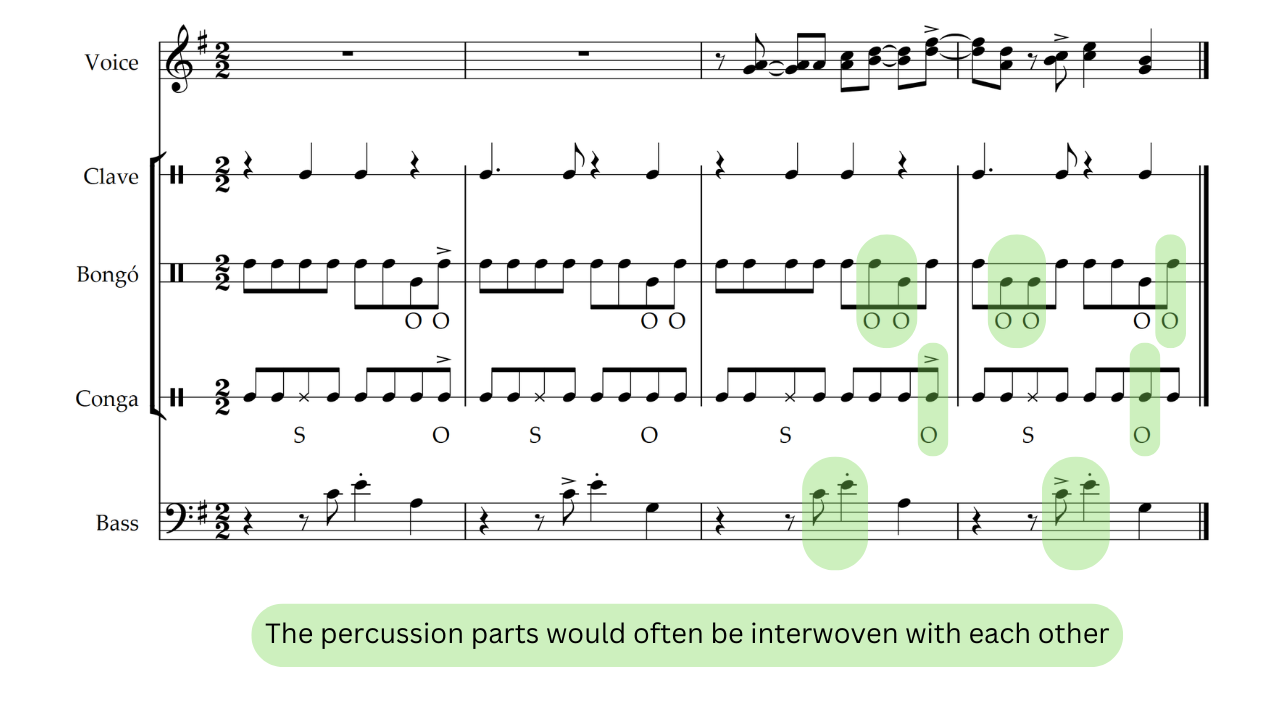
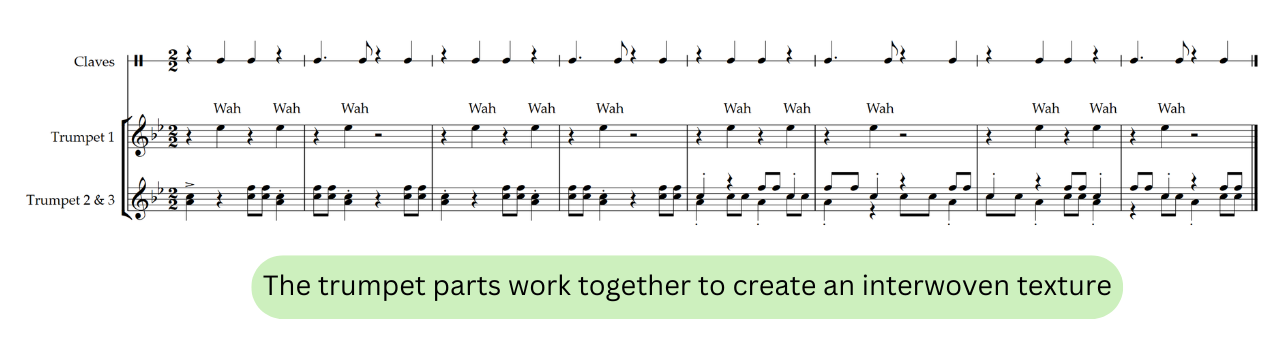
Similarly to incorporating dance rhythms, Rodríguez’s use of interweaving parts impacted the entire ensemble. Likely being inspired by the interlocking rhythms of rumba as well as other parts of Afro-Cuban culture, he started interweaving almost every instrument within the ensemble. With the rhythm section that would look like exchanges of open tones and slaps between the bongó and conga, as well as multiple guajeos in the tres and piano. Sometimes the bass would also enter the conversation and land on complimentary accents between the instruments. Rodríguez also interwove the trumpets too, often breaking them into two or three independent parts that when combined, reinforced the feeling of consistent eighths/quavers.
No Toque El Guao
Arsenio Rodríguez
Kila, Quique Y Chocolate
Arsenio Rodríguez
The last key factor of Rodríguez’s son montuno were the bass lines. Up until the 1940s, the bass usually defaulted to the small group of ostinatos we looked at earlier, which were often chosen based on the style and tempo of a given piece. However, Rodríguez came along and wanted the bass to play in a more lyrical manner, as if it had its own melody. At first, he reverted back to the beat 4 push found in the rural mountainous styles of Cuba, giving the bass line more syncopation. Once this was established he then started creating a myriad of variations that were all considerably more melodic than other basslines at the time. Some implied clave direction, others used elements from the estribillo (the vocal hook), and at times he would use more than one in the same piece, likely being the first Cuban composer to integrate multiple basslines into son.
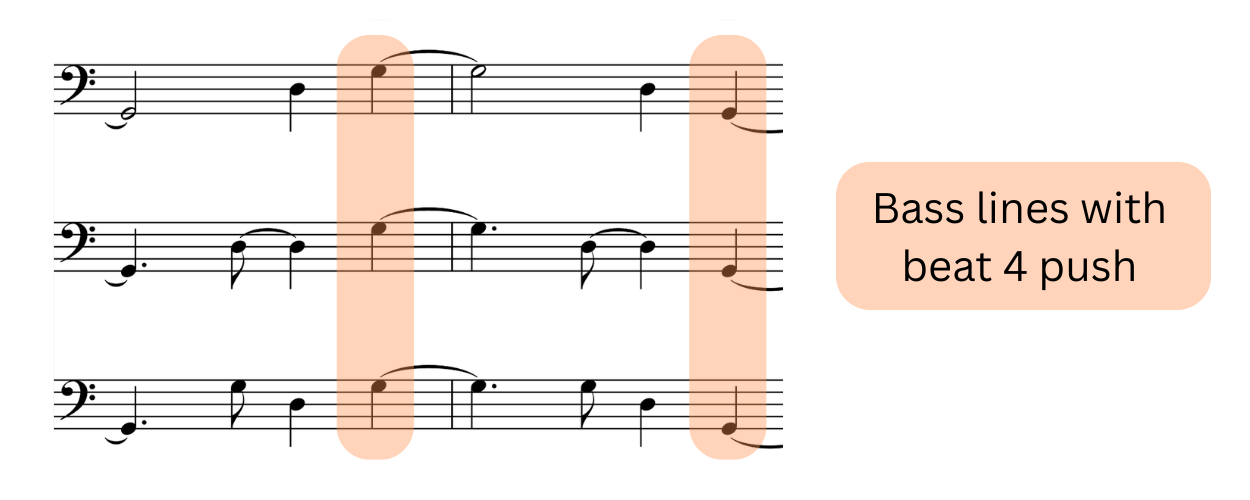
No Hay Yaya Sin Guayacán
Arsenio Rodríguez

Cangrejo Fue a Estudiar
Arsenio Rodríguez
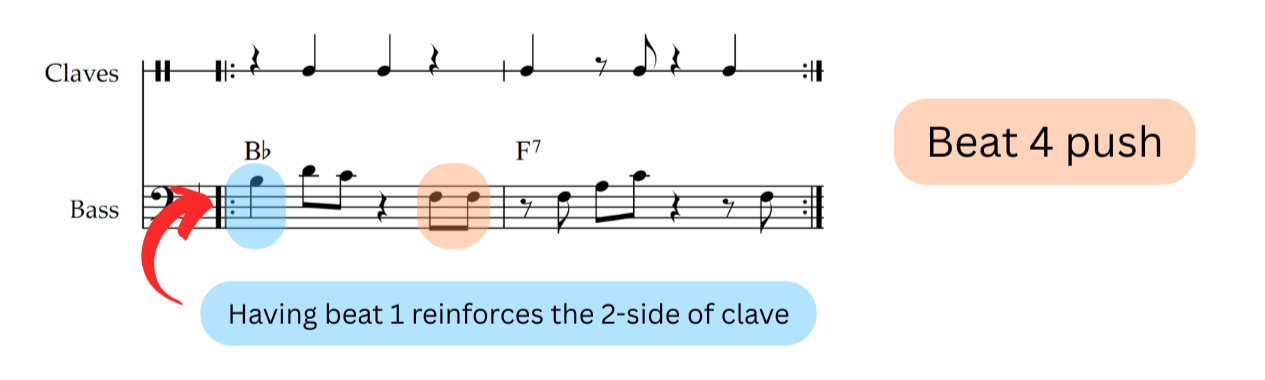
Juventud Amaliana
Arsenio Rodríguez
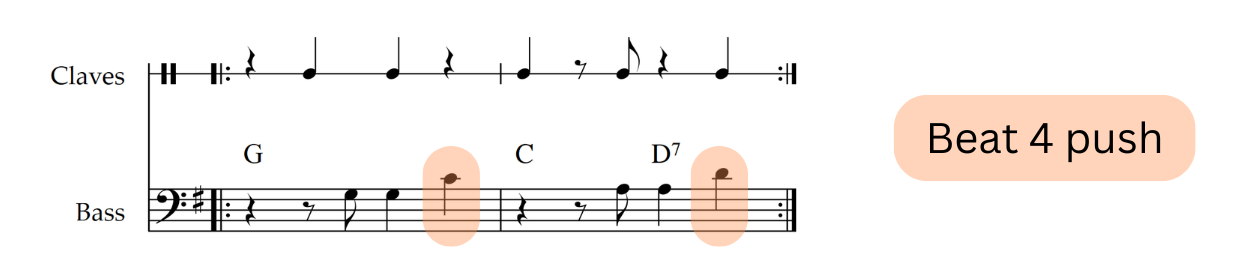
Interestingly, the beat 4 push also made its way into other parts of the ensemble, specifically the conga. When the instrument was first introduced into the conjunto, the main vocabulary it drew upon was from rumba where it would play patterns built off of consistent eighths/quavers. Somewhere in the 40s, this foundation merged with the beat 4 push and resulted in the creation of the most used conga part in history. We now refer to this rhythm as a tumbao, and after its creation with son montuno it has become the staple pattern for the conga to play in most ensembles. Listening to recordings of Rodríguez’s conjunto, it can be hard to distinguish much of what the conga is playing but two of the elements that can often be heard are a slap tone on beat 2 with a singular or double open tone on beat 4. Besides these particular accents, the rest of the pattern is often consistent eighth notes/quavers that are played as muffled tones a la rumba, which give a driving feel to the tumbao without interfering with the rest of the ensemble. These days there are a number of different variations of the tumbao, some being clave orientated, others clave neutral, with almost all of them only adding more open tones or slaps around the original model. It should also be noted that at this time only a singular conga was used.

Cero Guapos En Yateras
Arsenio Rodríguez
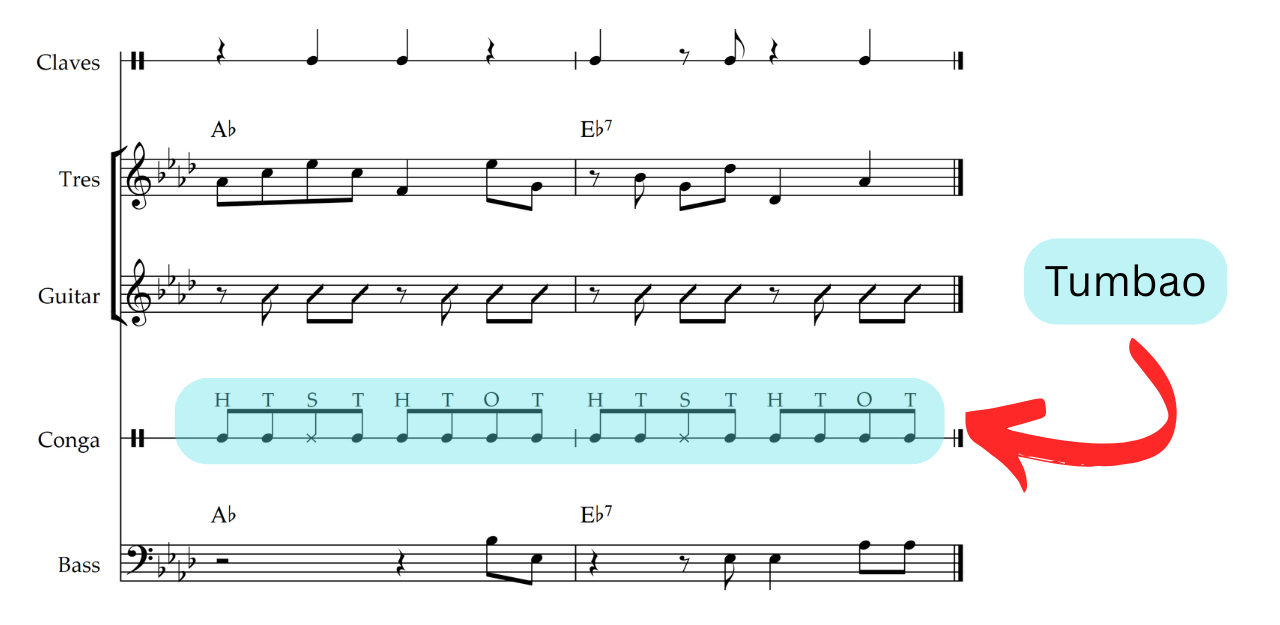
However Rodríguez didn’t stop there, and implemented even more changes to son cubano, this time changing the overall form of the style. Typically, son was made up of two parts: the verse, and the montuno. To help drive the piece toward a final climax, he added another modified montuno section to the end of the piece which he named the diablo. One of the main characteristics of the section was the vocal refrain which alternated with the trumpets every four bars. After a cycle, the voices reduced their estribillo by half but still alternated with the trumpets, creating what was called a picao. Eventually, the trumpet section would stop playing to allow for the lead trumpet player to improvise until the original estribillo was restated by the ensemble, which would conclude the diablo section.
In 1946, Rodríguez added a transitionary section called the cierre or bloque to help transition between the regular montuno section and the diablo. This new section was used to deceive dancers by using a mixture of syncopated hits that would disorient listeners as to where the clave cycle was placed. Additionally, cierres were often used to conclude a son montuno, which added a secondary level of confusion where listeners were unsure whether a piece was coming to an end or leading into the diablo. As a result of the two new sections, the most common forms used in son montuno were:
Intro, Montuno, Solo, Cierre, Diablo (Cierre, Diablo, Cierre, Diablo etc.)
Intro, Verse, Montuno, Solo, Cierre, Diablo (Cierre, Diablo, Cierre, Diablo etc.)
Juventud Amaliana
Arsenio Rodríguez
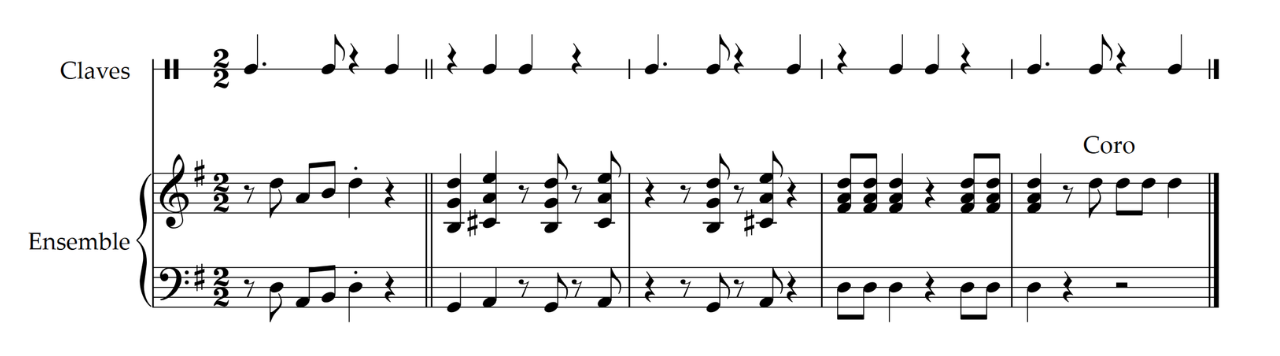
Rodríguez was a very creative individual and experimented with many different textures throughout his career. Although we have discussed the general form and instrumental roles in son montuno, many times he would alternate which instrument soloed and even wrote songs that could be played in both clave directions depending on what he felt like on the day. At the time, these aspects came together to make Rodríguez very popular with Afro-Cuban audiences but unfortunately his music didn’t find a place with other audiences. In direct competition to his conjunto was another band by the name of Sonora Matancera, which offered a completely different take on son. Where Rodríguez leaned on the beat 4 push, Sonora Matancera would maintain strict downbeats, more aligned with son cubano of the 1920s. The instrumentation was identical between both conjuntos, but due to a less syncopated approach, Sonora Matancera became considerably more popular.
Vive Como Yo
Sonora Matancera
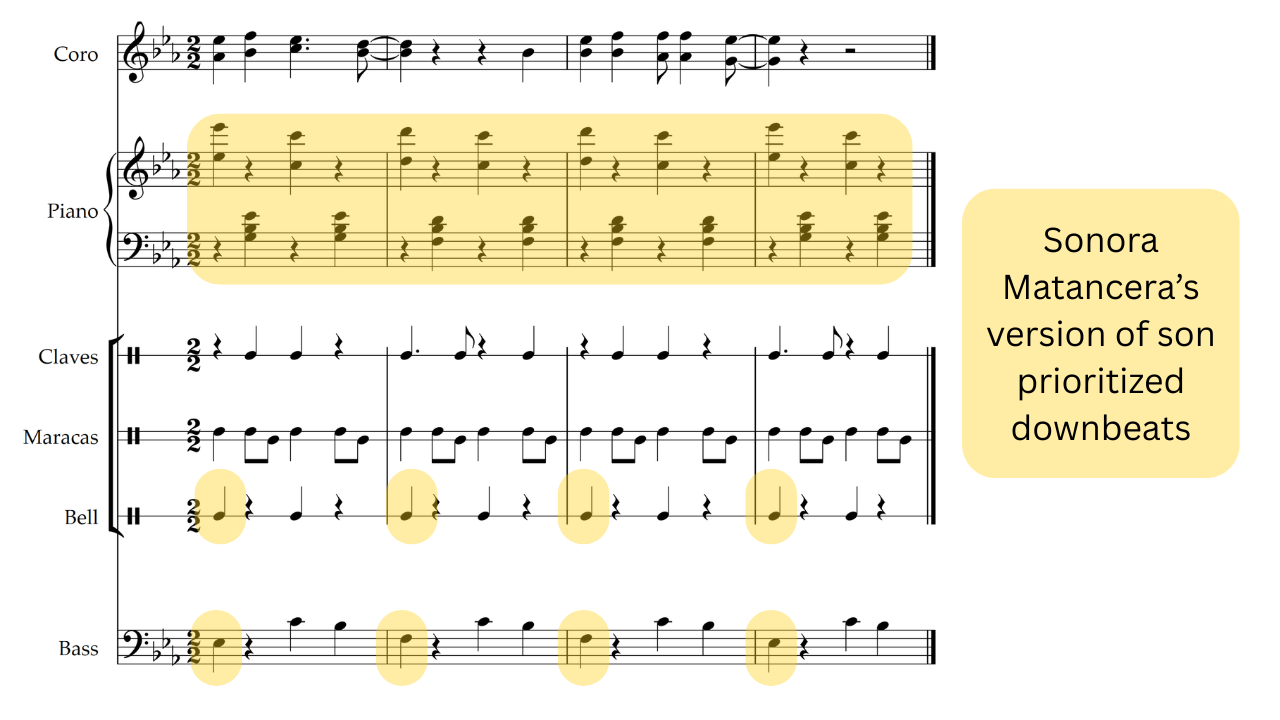
The innovations of Arsenio Rodríguez led to some amazing developments with son which helped redefine Cuban music as a whole as well as primed the country to transition into the next era of styles in the 1950s. Even though his name is not commonly known today, Rodríguez’s creativity has left a lasting impression on Latin American music for the last 80 years, particularly in the bass lines and conga parts still being played today.
With all of this in mind, it might be worthwhile to offer a brief summary of the various points we have covered, at least when it comes to the various parts played by the rhythm section. Although son montuno did change many of the instrumental parts, some did stay the same as before and seeing all of the options side-by-side can be helpful in understanding just how many rhythms are available to us as writers.
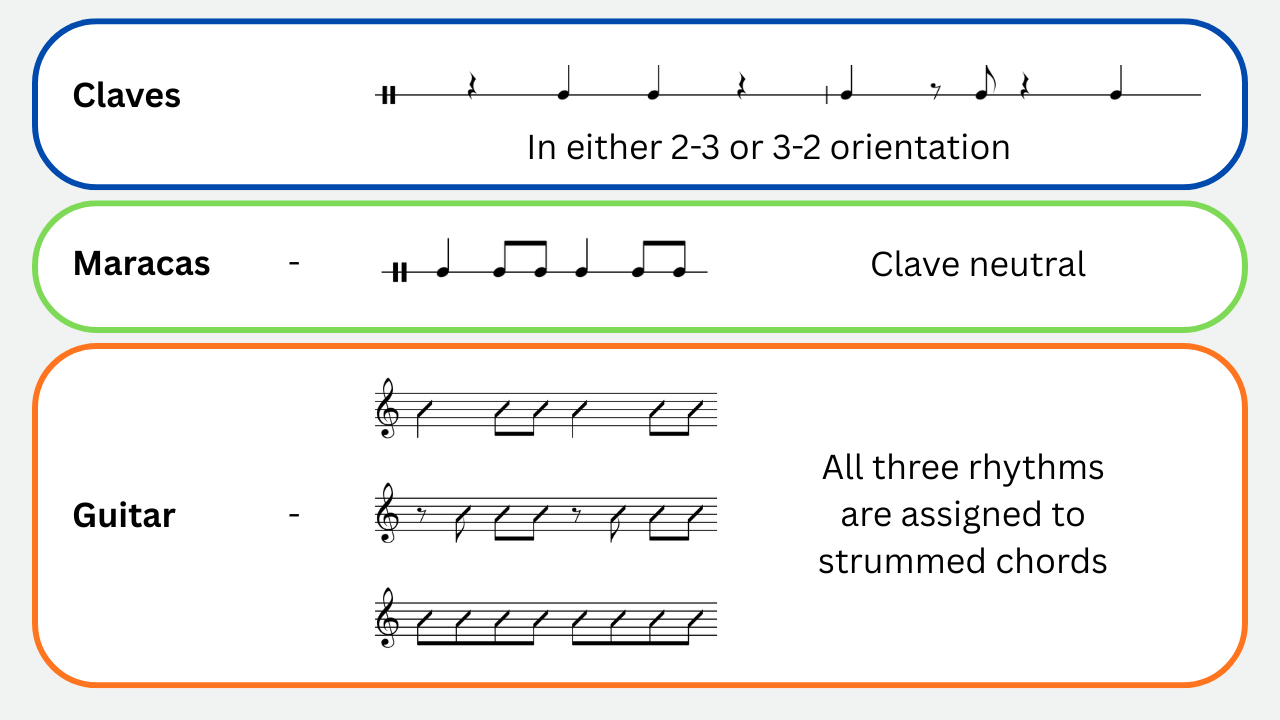
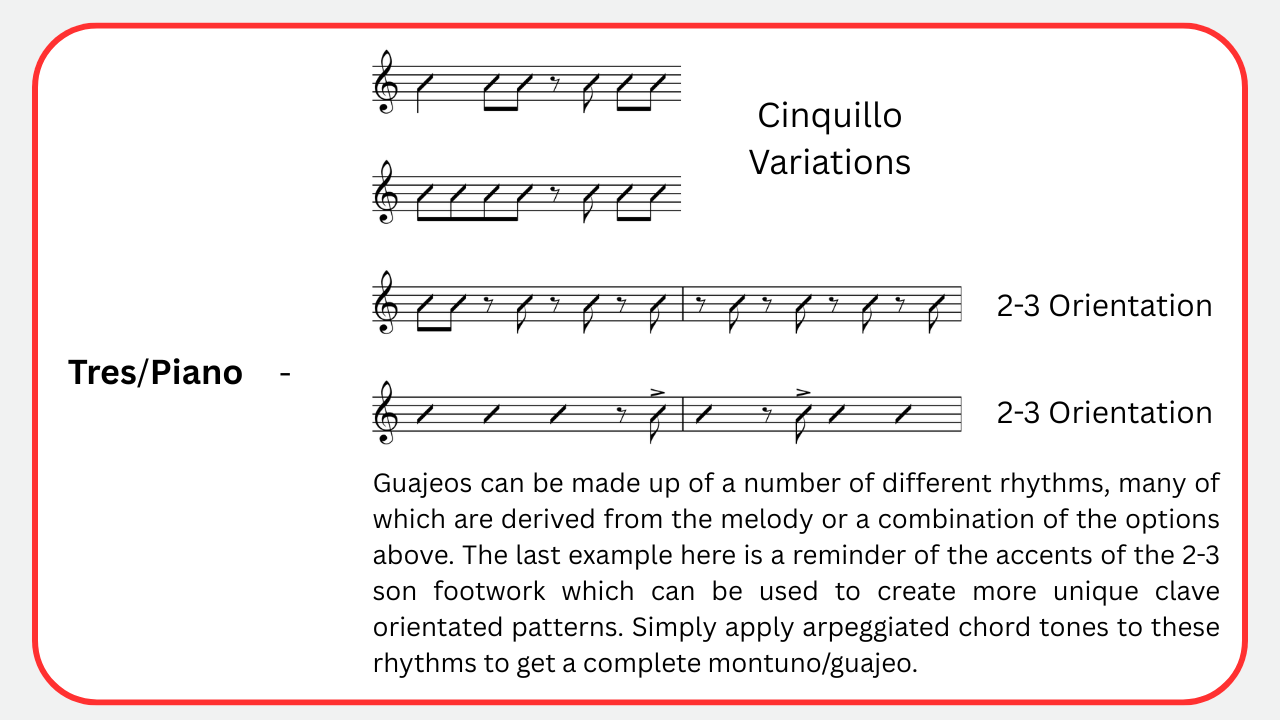
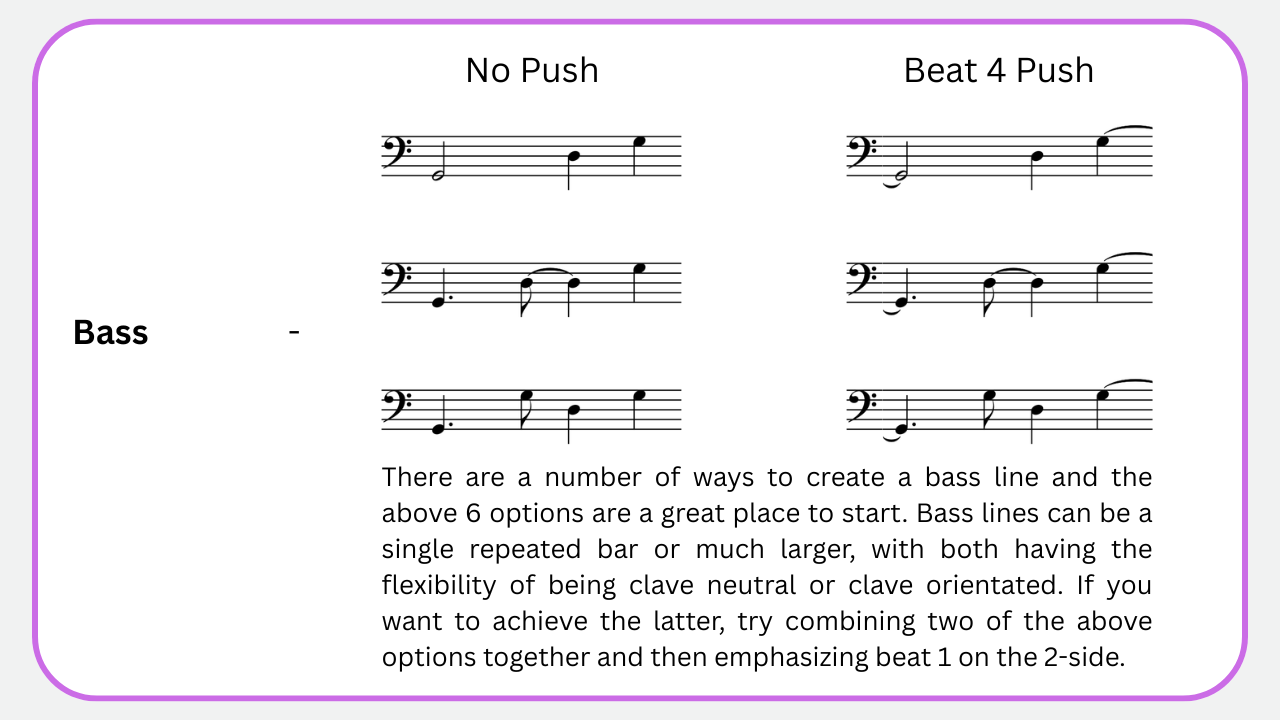
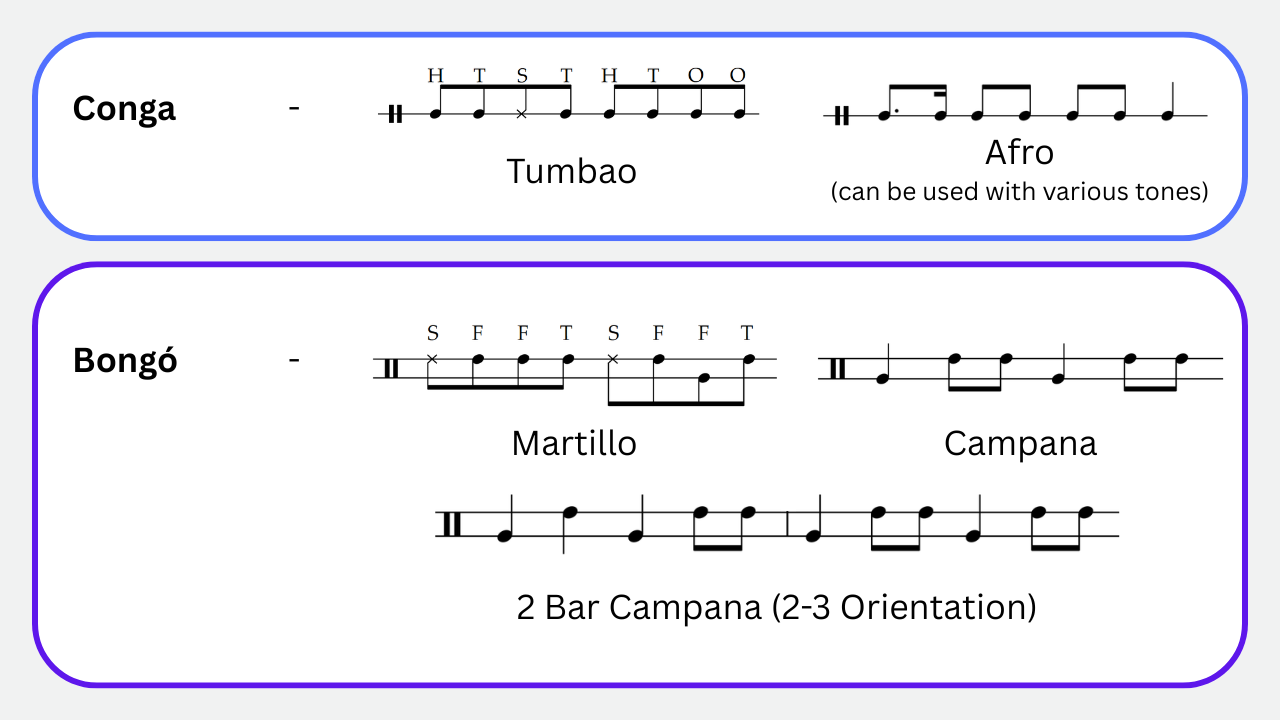
Throughout the 1940s, these were the common patterns for each of the instruments to use. However, we should be mindful that there were of course many variations that took place between pieces, namely in the guajeos played by the tres/piano which were often derived from the vocal melody. Just by changing that one element, a whole piece could feel different. Not to mention that even when a guajeo was built around a given melody, players could add elements of syncopation or extra arpeggiated notes which could change how a line sat. With this short list of examples, a lot of ground can be covered, and almost all of the instruments maintain the same sort of patterns in Latin music today. But we aren’t quite finished yet. Due to the popularity of son, almost every Cuban style at the time was influenced by some of the characteristics we’ve discussed. So much so, that many of the styles today actually have more in common with son and can be hard to differentiate from son cubano or son montuno. Before wrapping up, it would be wise to look at these styles as some of them add a few more variations into the mix
The Integration of Son
I think it is safe to say that Cuban music can be thought of as existing in two periods: pre and post son. Once the style spread across the country, it influenced every musical avenue available. Everyone loved the feeling of the montuno and before long almost every style on the island was influenced by son in some way. Today, many of the names of these hybrid styles have been simplified to only reflect the original style name even though they heavily feature characteristics from son. For instance, it would be more accurate to call the version of bolero that was created in the 1920s bolero-son to help define the musical differences present between the original style developed in Santiago de Cuba and the son-influenced hybrid. However, today we simply refer to it all as bolero which can be quite confusing for those unaware of the style’s history. To help differentiate the many styles and their hybrids, I will use their original name when referring to the earlier pre-son version of the style, and when talking about the son hybrid I will simply add the word son afterward such as guaracha-son.
Bolero-Son
In the 1920s, bolero was picked up by the son sextets/septets who began altering aspects to make it fit within the sound of their ensembles. As discussed in my resource exploring Cuban vocal styles, originally the style consisted of guitar and voice and focused on the lyric and vocal tone more than anything else. With the transition to bolero-son, one of the more important contributions was the inclusion of clave, which took the primarily clave neutral sound of bolero and orientated it around a two bar cycle. While this didn’t necessarily change the accompaniment parts initially, the son ensembles added instrumentation which helped reinforce the two bar orientation. Instead of just vocals and guitar, bolero-son featured all of the normal instruments found in a son sextet/septet, and when the conjunto format was created, the style expanded to feature that instrumentation too. For the most part, these new instruments maintained a similar role to what we have seen with son cubano and son montuno but at the slower tempo of bolero.
With the introduction of the piano in the 1930s and 40s, bolero-son quickly replaced the guitar with the new popular chordal instrument. By doing so, the style began incorporating elements of American Jazz and French Impressionism, differentiating it further from son and taking on an incredibly lush sound. There were also other developments around this time such as moving the cinquillo rhythm from the melody to the accompaniment to allow the vocalist more freedom with their phrasing. Additionally, instead of using a range of rhythms in the bass line, the habanera became the go-to option for bolero-son. While not a unique characteristic initially, the common pattern played on the maracas eventually became an iconic part of the bolero-son sound and is seen as one of the key rhythms associated with the style today.
Perhaps most noticeable with bolero-son was that it had become popular outside of the son sextets/septets and had crossed over to ensembles which had much larger instrumentations. With the extra horns, and even sometimes strings, the impressionistic harmony could be realized with voicings outside of the piano, transforming the style into something which sounded a lot closer to the jazz ballads being played in the United States. While many areas of the bolero did change in the first half of the 20th century, the love themes expressed in the lyrics and slow tempos were untouched.
Interestingly, even though we think of this style as inherently Cuban, in the early 20th century bolero-son became popular in other countries too, with Mexico perhaps becoming the most notable. Mexican composers mixed Cuban bolero with their own romantic songs and with the creation of the XEW radio station in 1930, Mexican bolero became popular throughout the country. As a result, many of the well known boleros that exist today, such as Besame Mucho, were actually composed in Mexico during this period, not in Cuba. Before long, bolero-son became popular in the United States and in 1941, Jimmy Dorsey had a number 1 hit with Aquellos Ojos Verdes.
Guajira-Son
Bolero was not the only style to be impacted by son, with guajira also being affected in the first half of the 20th century. As we explored in another resource, guajira had already undergone a significant transformation from the rural punto guajiro to the theatrical adaptation. Like bolero, in the 1920s the son sextets/septets started to adapt the style further, adding characteristics from son that redefined what the style sounded like. Guajira-Son, also known as guajira de salon to some, scrapped most of the defining traits of the original style but still maintained lyrics that spoke about an idealized guajiro lifestyle. Of course, other characteristics were likely maintained in varying degrees early on, but today guajira-son is a long way from its roots in punto guajiro.
One of the more prominent changes to the style was the move from triple to duple meter. This had occurred to some degree already in the transition to the theatrical guajira, but with guajira-son there was no evidence of the defining sesquialtera rhythm found in punto guajiro. However, the two bar lilt originally created the sesquialtera still remained and was further reinforced by the addition of clave. Other areas which changed included the vocals, where the decima system was abandoned for simpler verse structures, as well as the instrumentation which was now based on the son sextet/septet. However, not every aspect changed immediately and initially the melodies were still built around the mixolydian tonality found in punto guajiro. Today, guajira-sones are generally categorized by a groovy guajeo pattern in the piano more than anything else which can lead to some confusion as to what style it should be labelled as.
Guaracha-Son
Rounding out the three vocal heavy styles that were impacted by son is guaracha. As the style had somewhat led to the creation of son through the salon variant called rumbita, the two styles merged together effortlessly. As they both shared the same form structure, son only introduced minor factors to guaracha such as instrumentation. The end result was a new hybrid style which was faster than son and had a different lyrical topic.
Originally, guaracha had been a theatrical style and through the creation of rumbita the instrumentation had been reduced to just voice and guitar. The son sextet/septet expanded it to the standard lineup associated with son cubano, with all of the instrumental roles and parts reflecting those in son. However, the bass part was altered slightly by Arsenio Rodríguez in the 1940s who used a simplified cinquillo with a beat four push, establishing the common rhythm for guaracha-son still played today. In the end the two main defining factors which helped define the style as unique from son were the upbeat tempo and the comical lyrics derived from the satirical nature of bufo theatre.
El Pirulero No Vuelve Más
Arsenio Rodríguez
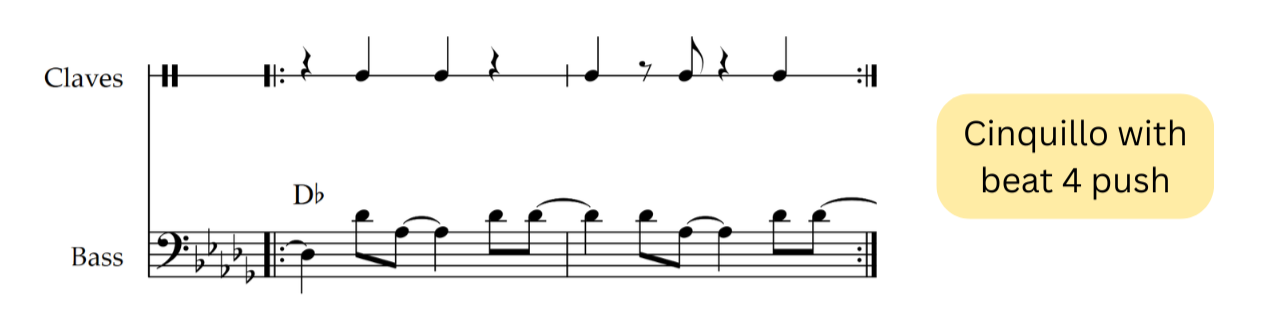
As you can see, the primary differentiating factor between the three hybrid styles we’ve covered are the topics of the lyrics. Of course each one has a few other unique factors to be mindful of, with bolero-son having the most, however these varied from piece to piece and weren’t always a given. Alongside these three styles, many others were also impacted by son, such as danzón, which was impacted so much that it created an entirely new family of styles. But that story requires its own dedicated resource to do justice to the amazing developments that took place.
And with that, we have come to the end of another resource. You may be thinking, hey wait a second, wasn’t this a resource about rhythm section parts? We haven’t talked about the drum set or the timbales at all. Well instead of loading everything into a single article which would likely be far too overwhelming to read, those two areas make more sense when looking at other styles. As the timbales are associated with danzón, we have already loosely talked about the rhythms they play in an earlier resource, however we will look into them again in the next resource when we dive into mambo and cha-cha-chá. By doing so, you’ll see how the instrument changed and more importantly know why those changes were made. From there, we will start seeing how the modern Latin rhythm section came together as well as how musicians began to incorporate the drum set alongside the percussion instruments. I promise that we will get to all of the instruments eventually, and for now I hope that you can come away from this particular resource feeling confident in what the majority of the rhythm section plays in a variety of Latin styles.
The Takeaway
Understanding what is going on in the rhythm section when listening to Latin music may just be one of the hardest elements to learn. Fortunately, many of the instrumental parts are shared between styles and by knowing more about son cubano and son montuno, we can start to see how the puzzle pieces fit together. Thanks to Arsenio Rodríguez, there were multiple variations and unique parts added to the mix which are still just as important today as they were in the 1940s. Take your time and get familiar with each of the rhythms and parts mentioned in this resource, not only how they are written but also how they sound. Experiment with them in your own music, and once you feel comfortable, the next step is to look at the layers of rhythms that were added in the 1950s thanks to the development of mambo and cha-cha-chá. But that can wait until next time!